
How to Build LGBTQ+ Community After Moving to a New City
Learn practical, low-pressure ways to meet LGBTQ+ people, find inclusive spaces, protect your privacy, and feel at home in a new city with confidence.
Introduction
Moving to a new city can feel like opening a door and discovering ten more doors behind it. You need to learn the transport system, find a reliable grocery store, understand the rhythm of your neighborhood and rebuild the everyday connections that used to happen naturally. For LGBTQ+ adults, there may be another important question: where can I meet people who understand parts of my life without requiring a long explanation?
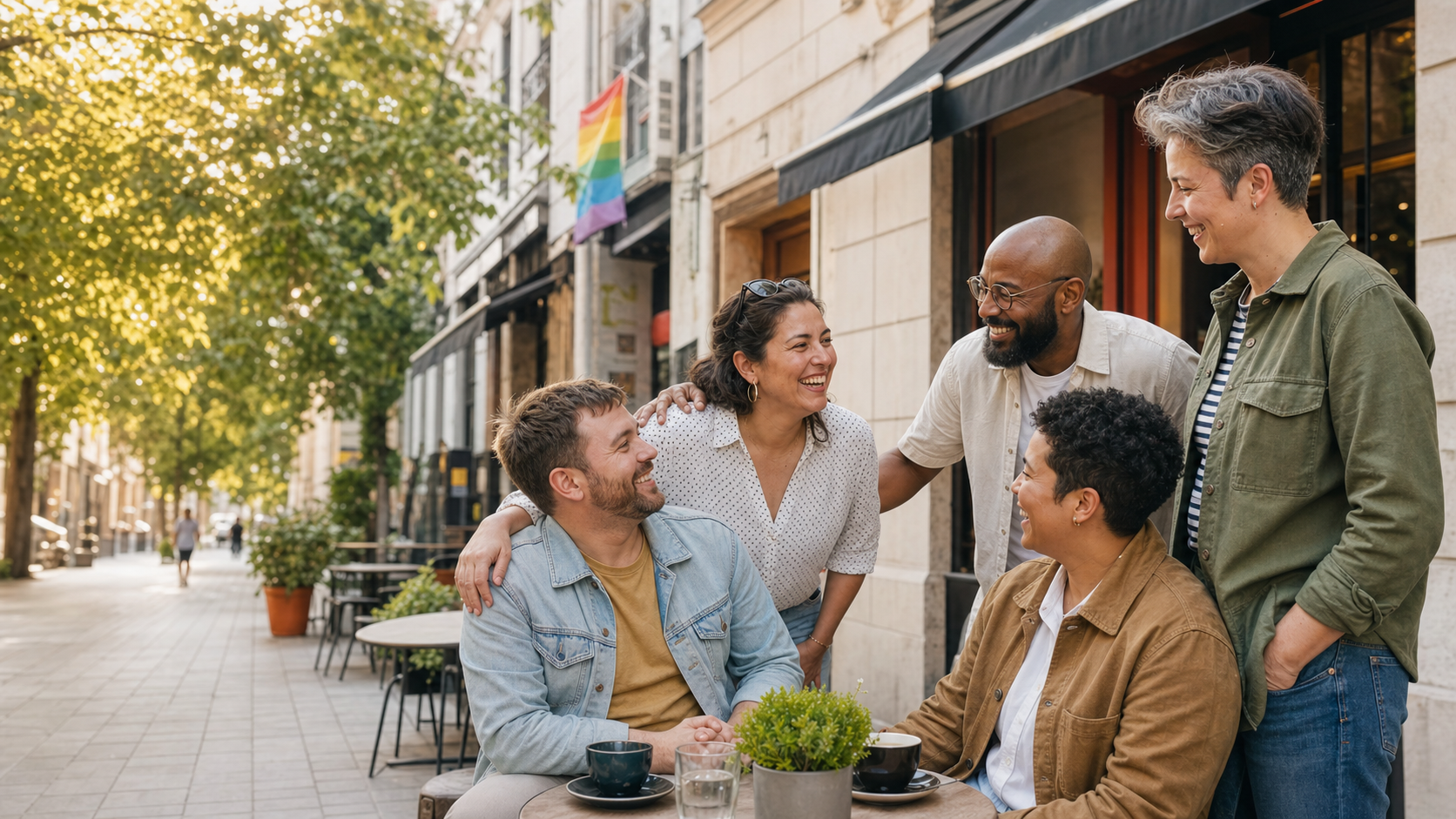
Community does not have to mean a large friendship circle or a packed social calendar. It can begin with one familiar face at a weekly activity, a friendly online conversation or a café where you feel comfortable being yourself. The most sustainable approach is usually gradual. Instead of trying to create an entire social life in a weekend, focus on repeated, low-pressure contact with people and places that match your interests and boundaries.
This guide offers practical ways to explore a new city, make meaningful LGBTQ+ connections and protect your energy and privacy along the way.
Start With the Kind of Connection You Actually Want
Before joining every available group, take a moment to define what would make your new city feel more like home. “Finding community” can mean very different things. You may want close friends, activity partners, professional contacts, creative collaborators or simply more LGBTQ+ people in your everyday surroundings.
Separate friendship, dating and general belonging
These needs can overlap, but they are not identical. If your priority is friendship, choose settings where conversation and repeated attendance are natural: book clubs, language exchanges, sports groups, volunteer projects or workshops. If you are mainly looking for a sense of belonging, public cultural events and inclusive neighborhood spaces may be enough at first.
Being clear about your goal also helps you communicate better. A simple sentence such as “I’m new here and hoping to meet people for museums and coffee” gives others an easy way to respond. It is specific without feeling demanding.
Choose a realistic social pace
Relocation already uses a great deal of mental energy. One or two social plans per week may be more effective than an overloaded calendar that leaves you exhausted. Select one recurring activity and one flexible option. For example, attend a monthly LGBTQ+ reading group while keeping an online community available for spontaneous conversation.
Progress may look modest at first. Recognizing names, learning local references and being invited to a group chat are meaningful steps. Familiarity often develops before friendship.
Find Inclusive Spaces Through Interests
LGBTQ+ community is not limited to nightlife. Many people prefer quieter, daytime or activity-based environments, and most cities offer more variety than is immediately visible.
Search for activities, not only identities
Combine an interest with an inclusive keyword when searching: LGBTQ+ hiking, queer board games, inclusive choir, LGBTQ+ professionals, queer crafts or rainbow families. Local community centers, libraries, cultural organizations and adult education programs may list events that do not appear in general search results.
Interest-based groups solve two problems at once. They introduce you to people with shared experiences and give everyone something to do or discuss. This reduces the pressure to create instant chemistry.
Pay attention to whether a group explains its accessibility, costs, language and code of conduct. Clear information often signals thoughtful organization. If details are missing, sending a short message before attending is completely reasonable.
Use repetition to turn places into community
One visit provides information; repeated visits create familiarity. Try attending the same event three times before deciding it is not for you, unless you feel unsafe or disrespected. People may be busy or shy during a first encounter, and established groups sometimes need time to recognize newcomers.
Small habits help. Arrive a few minutes early, greet the organizer and ask one open question. Afterward, mention that you plan to return. These actions make future conversation easier without requiring an outgoing personality.
Use Online Tools With Intention
Digital platforms can make a large city feel more navigable, especially when local groups are scattered. They work best when you treat them as a bridge to healthy connection rather than a measure of popularity.
Create a profile that supports your goal
Whether you use a community platform, social app or local forum, write a short profile that shows what you enjoy and what kind of contact you welcome. “New to the city, interested in architecture, cooking and weekend walks” offers useful conversation starters. You do not need to share your workplace, exact address or detailed schedule.
On Hoorly, for example, you can begin with conversation and learn whether someone’s communication style feels comfortable before deciding what comes next. A thoughtful first message usually refers to a shared interest and includes an easy question. “You mentioned independent cinemas. Is there one here you would recommend?” feels more natural than a generic greeting.
Move from chat to real connection safely
There is no universal timeline for meeting. If you choose to do so, select a public place, arrange your own transport and tell a trusted person where you will be. Keep the first meeting short enough that either person can leave comfortably. Coffee, a gallery visit or a daytime walk in a busy area can work well.
Trust your response to communication patterns. Respectful people accept a delayed reply, a changed plan or a boundary without pressure. You never owe someone personal information or an in-person meeting because you exchanged messages.
Build Relationships Through Small Follow-Ups
Meeting people is only the first step. Adult friendship often grows because someone makes a small, clear follow-up while the interaction is still fresh.
Make invitations specific and easy to decline
Instead of saying “We should meet sometime,” suggest a simple plan: “I enjoyed talking about photography. Would you like to visit the Saturday exhibition next week?” Specific invitations are easier to answer. Adding “No worries if your week is busy” keeps the tone relaxed.
If someone declines without proposing another time, leave the door open and move on. One unanswered message is not a verdict on your worth; people have complicated schedules and different social capacities. Invest most in those who show reciprocal interest.
Become a regular and contribute gently
Community becomes stronger when participation is not only about receiving invitations. You might welcome another newcomer, share an event listing, help stack chairs or suggest an accessible meeting place. Small contributions create trust and make you part of the group’s rhythm.
You do not need to become an organizer. Consistency, kindness and remembering details from earlier conversations are powerful forms of participation.
Protect Your Privacy, Boundaries and Energy
Feeling welcome should not require giving up privacy. Decide in advance what information you are comfortable sharing with new contacts. Using a broad description of your neighborhood and work is often enough initially.
Notice how spaces handle inclusion
An inclusive label is useful, but behavior matters more. Look for groups where people respect names and pronouns, avoid intrusive questions and respond constructively when corrected. Healthy communities allow differences in age, background, gender expression, disability, culture and social style.
It is also fine if a space is welcoming but simply not your space. You can leave a group without proving that it is objectively bad. Fit matters.
Give yourself recovery time
New social environments require attention. Schedule quiet time after events if that helps you reset. If you are nervous, choose structured activities with a clear start and finish. Bringing a book for the journey home or planning a familiar meal afterward can make exploration feel more manageable.
Loneliness can create urgency, but durable connection rarely appears on command. A steady routine gives relationships room to grow.
FAQ
How long does it take to build a social circle in a new city?
There is no fixed timeline. Familiarity can develop within weeks, while close friendship often needs months of repeated contact. Regular attendance usually matters more than meeting many people once.
What if there are few LGBTQ+ groups near me?
Look for inclusive interest groups, regional online communities and events in nearby towns. You can also start with one-to-one conversations rather than waiting for a large local scene.
Do I have to go to bars or clubs to meet LGBTQ+ people?
No. Community centers, sports groups, volunteering, cultural events, professional networks, classes and online platforms offer many alternatives.
How can I attend an event alone without feeling awkward?
Contact the organizer beforehand, arrive early and set a small goal such as speaking to one person. Choosing a structured activity gives you a natural topic of conversation.
What should I do if a group does not feel right?
You may leave and try another space. If anyone ignores your boundaries or makes you feel unsafe, prioritize your well-being and seek support from someone you trust.
Conclusion
Building LGBTQ+ community after a move is less about finding one perfect place and more about creating a pattern of safe, repeated connection. Begin with your actual interests, choose a sustainable pace and follow up with people who show mutual care. Over time, unfamiliar streets gain familiar faces—and a city begins to feel like yours.
Call To Action
If you would like a calm way to start connecting, Hoorly can help you meet LGBTQ+ people through genuine conversation. Share only what feels right, explore at your own pace and let common interests provide the first spark.
Hoorly